ANCHORAGE, Alaska (KTUU) – On an overcast, cloudy day back in October 2018, Kyle Andrews committed a crime that would alter his life forever and garner statewide coverage about one of the worst days of his life.
He says he had been smoking meth and heroin inside a halfway house when he started having issues with another man. Andrews said he felt paranoid and craved something to help him calm down and sleep.
What happened next impacted Andrews, and his freedom, and today it’s a major barrier for him finding a job.
News reports at the time say Andrews was the subject of a suspicious person call after someone spotted him acting erratically. He was found near the roundabouts at Dowling Road and the Seward Highway where he ran into a construction zone, got into a construction vehicle, and then fled from police.
Officers chased Andrews and blocked him in with patrol cars near 64th Avenue and Ashwood Street, near Polaris K-12 School. The school was put into stay-put mode.
Andrews then drove the vehicle into a shallow marsh, ignored officers’ commands, and only after being tased was stopped and arrested on a warrant for escape. Andrews was additionally charged with vehicle theft, criminal mischief and resisting arrest. Along the path of his escape, muddy tire tracks could be seen on the sidewalk by the school and orange police crime tape lined the area.
That was the latest in a string of arrests that started back in August 2018.
Because of the escape and the school lockdown, news organizations wrote a story about the arrest with a photo provided by police. In the picture Andrew smiled intensely at the camera. His face was swollen and puffy.
Andrews says he had been using drugs or alcohol, in some form or another, since 2003 until 2019.
Then, in November of last year, Andrews emailed Alaska’s News Source.
“My name is Kyle Andrews,” his email read. “I was featured in the news several years ago and have since been to treatment and made outstanding progress. I am asking you for help. I have been looking for a job since I got clean and as far as I know, I am hitting a wall because whenever you google me ‘Kyle Andrews Anchorage’ … well, see for yourself. It’s amazing what one bad day in the news can do for someone. I would appreciate an opportunity to offer you a chance to visit the men’s group I run on Wednesday night and take a look at the content of the meeting, participate and write a story. Please let me know if you are interested.”
Updating old news stories has been a growing focus of newsrooms across the country. “The Right to be Forgotten” is an initiative that pushes for people to have the right to have information about themselves removed from internet searches or other online sources, and has been implemented in places like the Cleveland Plain Dealer news organization, with funding from the Google GNI Innovation Challenge. It’s become a social justice issue, partly because some crime stories can be clouded in bias.
“Many have turned their lives around and are trying to move forward, but our stories get in the way, blocking job hunts or relationships,” the Cleveland Plain Dealer’s website says.
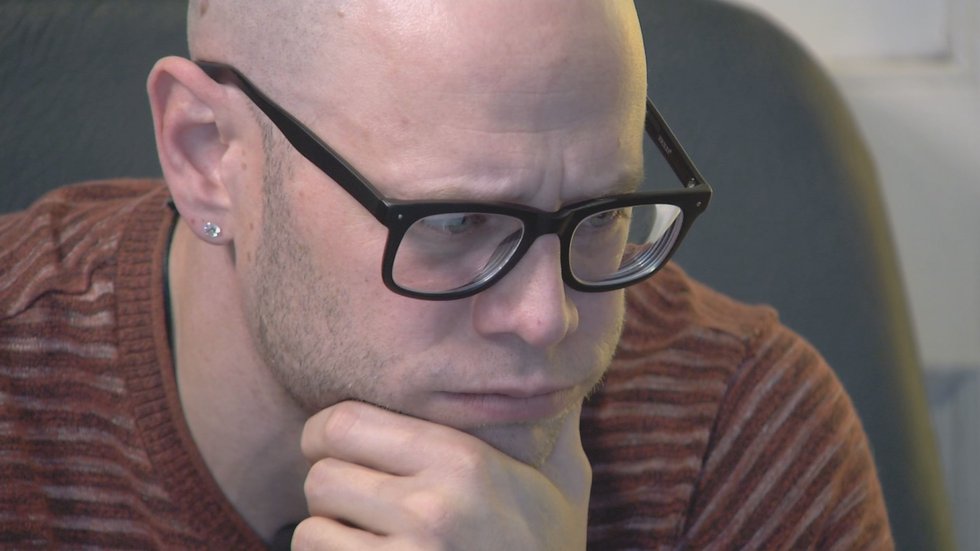
Andrews met Alaska’s News Source in a coffee shop where he was handing out flyers for his start-up catering business. Today he looks healthy; he works out and stays in shape.
“When I was using it was a like distraction, right? And my anxiety kind of took over and it became a compulsion, and so now, I just have a lot of time and I don’t enjoy wasting my time,” he said.
Andrews, like many formerly imprisoned Alaskans, faces huge obstacles finding a job and good housing.
According to the National Survey on Drug Use and Health, Alaska was ranked as one of the top 10 states for illicit drug use in 2010-11. According to the survey, 13.65% of Alaska residents reported using illicit drugs in the past month at the time it was taken. The national average was 8.82%.
Additionally, Megan Edge of the ACLU of Alaska said Alaska’s high rate of recidivism is about 66%. Alaska defines recidivism as returning to custody within three years of release.
There are also societal barriers, which Andrews faces, that impede stability and reintegrating to society.
“Anybody with a felony on their record is going to face a lot more barriers,” Edge said.
One of those barriers is news coverage that vividly details a person’s crime and remains on the internet forever.
According to Anchorage nonprofit Victims for Justice, the conversation about life after prison should also include the victim.
“If someone is truly on a path to recovery and has the ability to be a meaningful participant in society again, then it’s important that there are those paths involved, and particularly for someone who may not be a violent offender where there isn’t concern in that area,” said Victoria Shanklin, executive director for Victims For Justice.
Victims for Justice is an organization that specializes in services to victims of violent crime outside of domestic violence and sexual assault.
“It’s really important that those who are impacted by the crime have a voice throughout the process and have a way to process what’s going on and heal,” Shanklin said. “Sometimes that’s more possible than others and it really just depends on the individual, it depends on the crime, and again in this case it appears he was not a violent offender. While acts are violating, and that has an impact on the victims, there is a difference there.”
Edge says that about 96% of the prison population will be released at some point over their lives.
“When we’re thinking about justice, a lot of the time what we’re really seeking is like, a level of accountability,” Edge said. “And so, does accountability look like punishment, or does accountability look like rehabilitating somebody so they become a productive member of our society?”
Andrews said his biggest struggle is finding someone who will give him a job.
“I have a masters in business and years of professional experience and can’t find a job that will hire me and pay me what I’m worth,” Andrews wrote via email. “If I didn’t have my criminal history I would be able to make 60-100k depending on where I live. It’s been a major struggle.”
Edge said there are national movements to stop prospective employers from asking people if they have been convicted of a felony.
Alaska’s News Source told Edge that some people say a person like Andrews who committed crimes should have to live with the consequences.
“I think about, like, what if I was defined for the rest of my life by my worst mistake, where would I be?” Edge said. “And I go back to this idea of accountability. So Kyle has been held accountable for what he has done, and what do we want as a community? Do we want to put him in a concrete warehouse with four white walls to stare at for the rest of his life, where we pay about $150 a day for him to just sort of exist, or do we want Kyle to be back in the community contributing to our economy, contributing to our community in a positive way?”
Andrews said it’s unfortunate his actions impacted others.
“But what I can do is I can talk about those things and help other people realize it can be better,” Andrews said.
Linda Sheldon Skeek went missing in Anchorage on New Year’s Day 2016. She has never been found and is presumed to be a homicide victim. Linda is one of an unknown number of missing and murdered Indigenous people (MMIP) in Alaska. Victims for Justice (VFJ) assisted Linda’s maternal family after she disappeared and during the trial of Linda’s husband. This video tells Linda’s story through interviews with her mother, aunt and stepfather and with VFJ lead advocate Michelle Evans. It explores the scope of the MMIP crisis in Alaska and steps being taken to address it. Besides Linda’s family and Evans, the video also contains interviews with Ingrid Cumberlidge, MMIP Coordinator for Alaska; Charlene Aqpik Apok, executive director of Data for Indigenous Justice; and Victoria Shanklin, executive director of VFJ. The video was shot and produced in 2021 by Vim Pneuma Media.
By Patrick Enslow
Published: Dec. 3, 2021 at 9:05 AM AKST
ANCHORAGE, Alaska (KTUU) – Dec. 2 is a difficult day for Nancy Furlow and her family as they remember the passing of Brandon Irlmeier, who died on that date in 2017 at the age of 20.
Every year they remember Irlmeier’s life by visiting a memorial at the base of a covered staircase on East Sixth Avenue, where he was killed. The family uses this time to honor Irlmeier and share things they wish they could tell him about what’s going on in their lives.
“We’re going to keep working hard to bring attention to your case,” Furlow said as she spoke to his memorial. “So that those responsible for killing you are brought to justice. We know you deserve that much.”
The Anchorage Police Department shared little details about Irlmeier’s case and said it’s an ongoing investigation, but Furlow, Irlmeier’s grandmother, said she has seen nothing in the case change since the initial leads following his death four years ago, including finding those responsible for his death.
It’s been difficult for Irlmeier’s family to visit the memorial, made more challenging by vandalism. They said it’s been targeted 20 to 30 times since they put it up.
“They put a bullet in there one time, in the flowers, and we felt like they were trying to just kill Brandon all over again,” Furlow said.
She added prior attempts to vandalize the memorial include ripping down wreaths, dousing it with fire accelerants and ripping up pictures and cards.
Anyone with information about this case should call 311 or Crime Stoppers (907-561-STOP) to remain anonymous.
In every neighborhood, there is risk someone will become a victim of a crime. According to recent Anchorage statistics, for years, property crime and theft have increased in suburban neighborhoods. While police are still the best deterrent, it is impossible for them to be in every neighborhood at all hours of the day. This is why some areas have turned to neighborhood watches to help fill in the gaps. Victims For Justice Intern, Taylor Marrufo, interviewed her local neighborhood watch to learn more about these programs and how they help community members feel safe and report suspicious activity. Here is what she learned:
What is a neighborhood watch?
Neighborhood Crime Watch is a Crime Prevention Program of the Anchorage Police Department. It’s one the most effective and least expensive ways of reducing and/or preventing crimes in residential areas. This program is designed not only for citizens to help local police, but it also gives a sense of peace, safety, and security in the neighborhood. The program also helps to improve communications between neighbors by implementing an appropriate level of neighbor involvement to a point where burglaries and other property crimes can be prevented.
What are the goals for having a neighborhood watch in your community?
Increase awareness of the crime of burglary and other property crimes.
Implement various safety and residential security strategies to make homes more secure and less likely to be targeted.
Help neighbors recognize signs of suspicious and criminal activity and how to properly report them to the police.
How do we start a neighborhood watch?
The first thing people need to do is talk with their neighbors to find out who wants to be part of it. Neighbors will need to decide the boundaries of the watch area. It’s recommended each neighborhood should watch no more than 20 houses. After that, all neighbors need to have a one-hour meeting, at least once a week, to discuss any issues or news within their community. Afterwards, they would then report such activities to the police.
For those who participate in the neighborhood watch, should they wear uniforms?
“I think everyone should wear a reflective vest. If it’s dark out, we won’t be able to see if it’s one of our neighbors or someone else.” – Robert N.
If there is suspicious activity on your street, do you want to confront the situation?
“No. I think the police should stick with that. If there was something going on in the neighborhood, I would feel more comfortable if the police handled it. Plus, if the person has a gun, then I definitely want the police to be here.” – Scott L.
For those who are patrolling, do you want them to inform you beforehand?
“I don’t think that’s necessary. There’s a lot of us on our street. It would be a waste of time if one person had to call everyone just to let them know they’ll be outside patrolling.” – Spenard Resident
What changes do you want to make in the neighborhood watch?
“To be honest, I don’t know if there should be any changes to the neighborhood watch. We’re still kind of new to this, but I think it’s been successful. Everyone feels safer knowing others are keeping an eye on the neighborhood.” – Jewel Lake Resident
The main goal for having a neighborhood watch is to help keep you and your neighbors safe. Although the police are there to help patrol and keep everyone safe, they can’t be in every single neighborhood all day, every day. With the help of all neighbors, anyone can report suspicious activity and the police will be on route to keep the public safe.
Media coverage of crime greatly influences public perceptions about victims. As reporters rush to meet deadlines, particularly in the immediate aftermath of crimes, their reporting may not reflect the desired sensitivity to traumatized victims. Because many reporters do not receive training about how to interact with victims, you have an opportunity to help them approach crime stories with sensitivity. As a victim advocate who understands the perspective of victims and knows what reporters need to include in their stories, you play a key role in advocating for victim-sensitive coverage of crime.
Advocating for victims with the media also includes helping victims decide whether to accept interviews, how to minimize invasions of their privacy, and how to exercise their rights and options in dealing with reporters. Advocates can also help victims anticipate questions and prepare how to answer them. Before the Interview
By giving victims the following checklist of questions and walking through it with them, you can help victims decide whether to participate in an interview:
What are your goals in speaking to the media? What purpose do you hope the interview will serve? Will it help the community learn more about your loved one or understand the impact of crime on victims? Are you willing to answer questions from reporters who might not understand your pain or your point of view?
Would the interview invade your privacy? If you are still struggling with the emotional, physical, or financial impact of the crime, would speaking to a reporter disturb you or violate your privacy? You may want to discuss the pros and cons with a victim advocate before making your decision.
Does refusing the interview increase or decrease your control over what is published about the crime? Denying an interview will not prevent publicity about your case. If the story is newsworthy, the media will publish the story with or without interviewing you. Also, an interview may provide you with an opportunity to offer your perspective on the crime.
Would you prefer that someone else speak for you? If you would rather not be interviewed, you may ask someone else — an attorney, a victim advocate, a clergy member, a family member, or a friend — to represent you in media interviews. That person can also release written statements on your behalf or accompany you to interviews if you decide to accept them.
Would granting an interview affect the investigation or prosecution of the crime? Giving an interview may compromise the investigation or prosecution of a crime. You may want to speak with an advocate or an attorney before deciding to grant an interview.
Do you want to set conditions for the interview? Although reporters and producers may not agree to the conditions you suggest, they will most likely comply with reasonable requests if they want your interview. You have the right to ask or express your wishes regarding:
Time and location of the interview
Visiting the set or location before an interview
Advance information about questions, the reporter’s angle, or plans for using your interview
Requesting that a victim advocate, lawyer, or support person be present
Issues you will not discuss » Requesting a specific reporter or producer
Protecting your identity (through silhouettes and electronic distortion of your voice)
Excluding children and other family members from the interview
Excluding photos and other images you find offensive
Excluding offenders or other participants to whom you might object
Preparing Victims for the Interview Share the following tips with victims who agree to interviews:
Bring a trusted individual to provide support.
Prepare for the interview by having an advocate list questions the reporter may ask and rehearsing responses.
Refuse to answer a question by:
Polite refusal: “I’m sorry, but I don’t want to talk about that.”
Bridging: Change the subject to what YOU want to talk about. Answer by saying, “What is really important about that issue is…” and then talk about what you think the audience should know.
Never speak “off the record.” Reporters may publish or broadcast anything you say.
If you don’t know the answer to a question, simply say you don’t know. Don’t guess or speculate.
You may request a correction if the article is inaccurate or you are quoted out of context. Newspapers and other outlets may publish corrections and television news may correct serious errors (although the option to do so is theirs). You can also contact management at the news outlet prior to publication or broadcast if the reporter was aggressive, insensitive, or obtained information dishonestly.
You may refuse a follow-up interview, even if you have previously agreed to be interviewed a second time. Victim advocates can play a key role in mediating between reporters and victims, especially when victims feel vulnerable and stressed. The victim, his or her family, and the wider community have an important interest in ensuring that media coverage is sensitive, accurate, and does not put the victim under duress or at risk.
1 Bonnie Bucqueroux and Anne Seymour, A Guide for Journalists Who Report on Crime and Crime Victims, (Washington, DC: Justice Solutions, 2009), 2–10, accessed
November 20, 2018, www. mediacrimevictimguide.com/journalistguide.pdf.

Recent Comments